

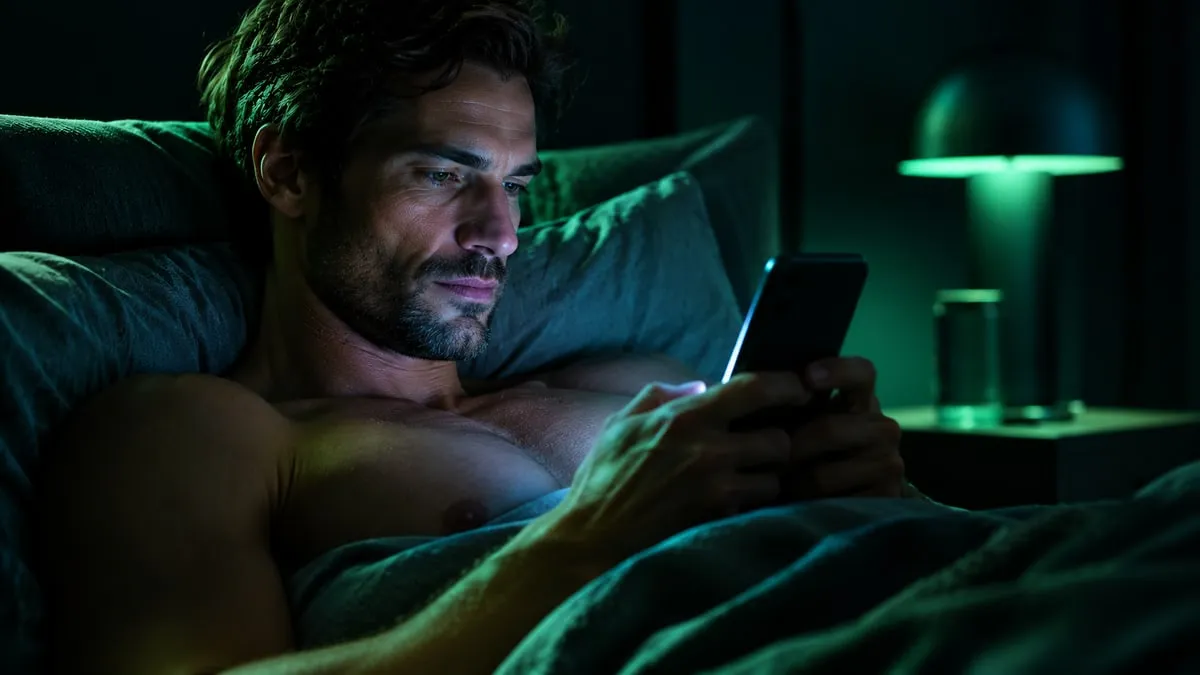
Screens in the evening: does blue light matter?
Many people tap away on their phone or watch a series in bed in the evening, while hearing that blue light from screens ruins sleep. How much of this is true? Research says there is something to it, but the picture is more complex than the “blue light is bad” slogan.
In a controlled study, a light-emitting e-reader in the evening delayed the release of melatonin and made waking up harder the next morning compared with a paper book. It is not only blue light that matters: the content, the excitement and a later bedtime do too.
Why light matters
Our body clock is set mainly by light. In the evening, dimmer light tells the body that sleep is coming, while a bright screen sends the opposite message. You can read more about the body clock and the role of light in the article on morning light and your body clock.
Simple rules
- Put the screen down 30–60 minutes before bed.
- Night mode or dimmer light can help, but it does not replace going to bed early.
- Keep your phone away from your bed, so you do not start reading when you wake up either.
- If you read, choose a paper book or an e-reader without a backlight.
What else matters for sleep?
Screens are one sleep factor among many. Caffeine timing, a consistent bedtime and room temperature matter at least as much. See caffeine and sleep, and the broader sleep and muscle growth article.
This article is general information. If you have a lasting sleep problem, see a doctor.
Sources
- Chang AM et al. (2015): Evening use of light-emitting eReaders negatively affects sleep, circadian timing, and next-morning alertness. PNAS 112(4):1232–1237
Updated: November 2026
Read on
Sleep and muscle growth: why the night matters
How much sleep you need, what happens to your muscles while you sleep, and what you can do to sleep better alongside training.
Biohacking
Morning light and your body clock: the cheapest biohack
Light is the strongest signal for your circadian rhythm. What we know about morning sunlight, and how to fit it into your day.
Sleep and recovery
Caffeine and sleep: when should you have your last coffee?
How much caffeine is safe according to EFSA, and why it is worth stopping six hours before bed.
Napra: training, meals and weight in one place
Follow your goals with the Napra app: a training log that knows your machines and a meal log.