

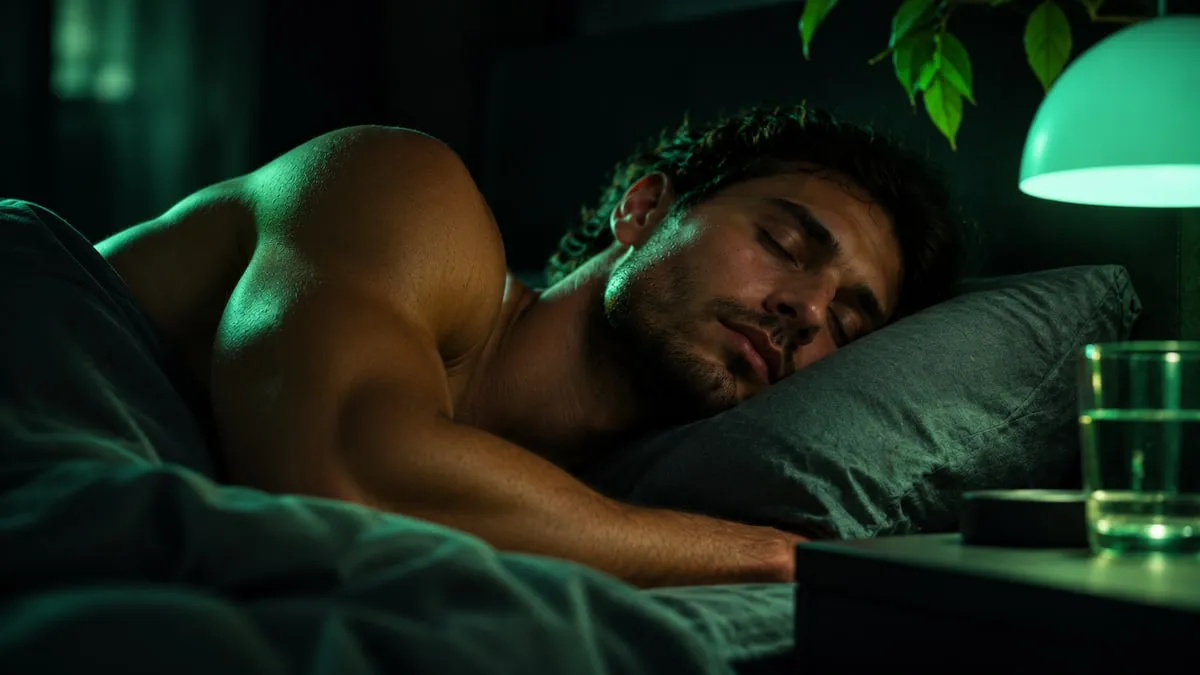
Sleep and muscle growth: why the night matters
Muscles do not grow in the gym but afterwards, during recovery. Training is the stimulus, and growth happens while your body rests and rebuilds. Sleep is the most important part of that rest, so getting your nights in order may matter even more than your training plan or your diet.
In this article we go through how much sleep is recommended, what poor sleep can do, and how you can improve your habits.
How much sleep is enough?
According to the joint consensus statement of the American sleep medicine societies, healthy adults should sleep at least 7 hours a night on a regular basis. People differ: if you still feel tired after 7 hours, you may need more.
What can poor sleep do?
Research suggests that lasting sleep loss hurts training performance, increases hunger and the urge to snack, and can slow recovery. Cause and effect are complex, so we do not give exact numbers.
If your progress stalls, look at your sleep before you rewrite your training or your diet. The article on plateaus has a checklist that starts with sleep.
Practical tips
- A fixed bedtime and wake-up time, at weekends too.
- Your last big dose of caffeine in the early afternoon at the latest. More in caffeine and sleep.
- A cool, dark bedroom, and less screen time in the evening. We cover this in the article on screens and blue light.
- After a hard session, do not force a very early alarm.
- Get outside into daylight in the morning, it helps set your body clock: see morning light and your body clock.
How to fit it around training
Very late evening training makes it harder for some people to fall asleep, but not for others. Watch your own body: if you sleep badly after evening sessions, try moving them earlier.
This article is general information. If you have a lasting sleep problem, see a doctor.
Sources
- Watson NF et al. (2015): Recommended amount of sleep for a healthy adult: a joint consensus statement of the American Academy of Sleep Medicine and Sleep Research Society. J Clin Sleep Med
Updated: November 2026
Read on
Caffeine and sleep: when should you have your last coffee?
How much caffeine is safe according to EFSA, and why it is worth stopping six hours before bed.
Sleep and recovery
Screens in the evening: does blue light matter?
What research says about using screens before bed, and what is worth changing.
Biohacking
Morning light and your body clock: the cheapest biohack
Light is the strongest signal for your circadian rhythm. What we know about morning sunlight, and how to fit it into your day.
Napra: training, meals and weight in one place
Follow your goals with the Napra app: a training log that knows your machines and a meal log.