

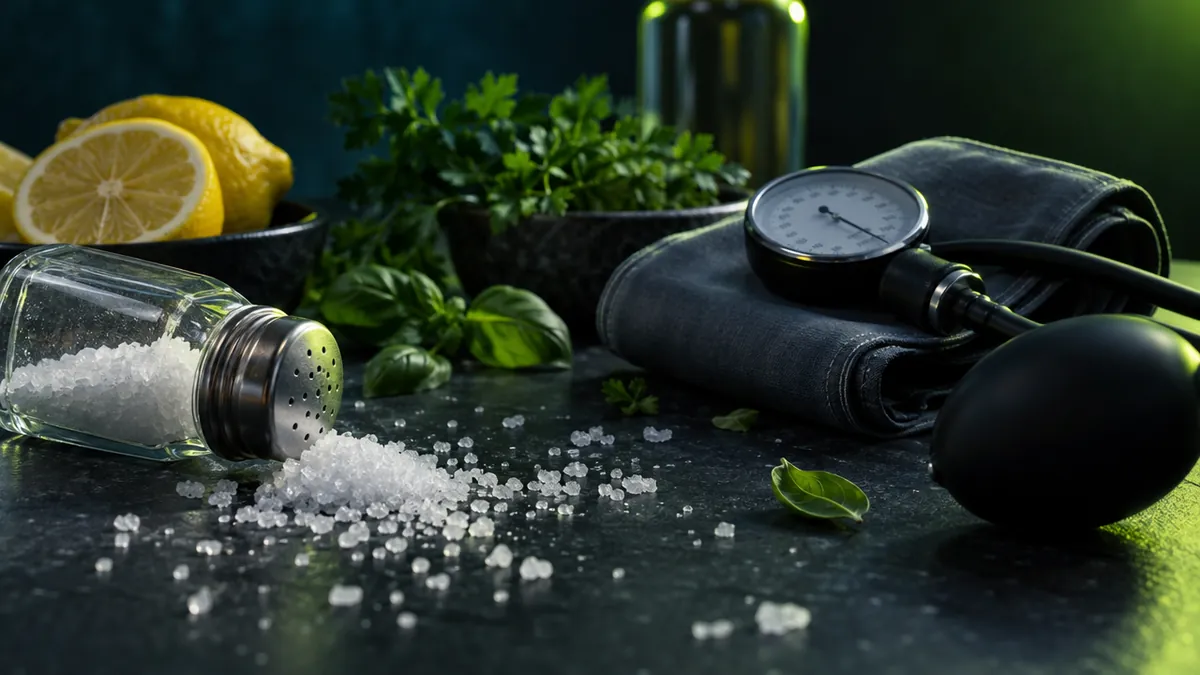
Salt and blood pressure: how much is too much, and how to cut down
High blood pressure is one of the main risk factors for cardiovascular disease, and cutting down on salt is one of the easiest factors to change.
How much is too much?
According to the WHO, adults should have less than 5 g of salt a day (about 1 teaspoon). Most Europeans eat considerably more than that. According to a meta-analysis, a moderate, longer-term reduction in salt lowered blood pressure on average, and more so in people with high blood pressure.
The DASH diet (lots of vegetables, fruit, low-fat dairy) combined with less salt brought an even bigger drop in blood pressure.
How to cut down
- Read the label: multiply the “sodium” value by 2.5 to get the amount of salt.
- Cook at home a lot: meal prep at the weekend.
- Use seasoning: garlic, lemon, pepper, herbs, vinegar.
- Do not add salt before tasting.
- Ask for a less salty version in restaurants.
Training and athletes
With heavy sweating (long, hot sessions), sodium loss matters, so replacing electrolytes can help. But in general, most people who train eat too much salt rather than too little.
See also: ultra-processed foods, the Mediterranean diet.
This article is general information, not medical or dietary advice.
Sources
- WHO (2012): Guideline: sodium intake for adults and children
- He FJ et al. (2013): Effect of longer term modest salt reduction on blood pressure: Cochrane systematic review and meta-analysis of randomised trials. BMJ 346:f1325
- Sacks FM et al. (2001): Effects on blood pressure of reduced dietary sodium and the Dietary Approaches to Stop Hypertension (DASH) diet. N Engl J Med 344(1):3–10
Updated: November 2026
Read on
Ultra-processed foods: are they really harmful, and what does it mean day to day?
Ultra-processed foods under the NOVA classification and health: what research shows, and how to sensibly cut down on them.
Nutrition
The Mediterranean diet: what it means in practice
Vegetables, legumes, fish, olive oil: the principles of the Mediterranean diet, a sample day, and how to bring it into everyday life simply.
Lifestyle
How much water should you drink a day?
EFSA's recommendation for total daily water intake, how much of it comes from drinks, and when you need more (training, heat).
Napra: training, meals and weight in one place
Follow your goals with the Napra app: a training log that knows your machines and a meal log.