

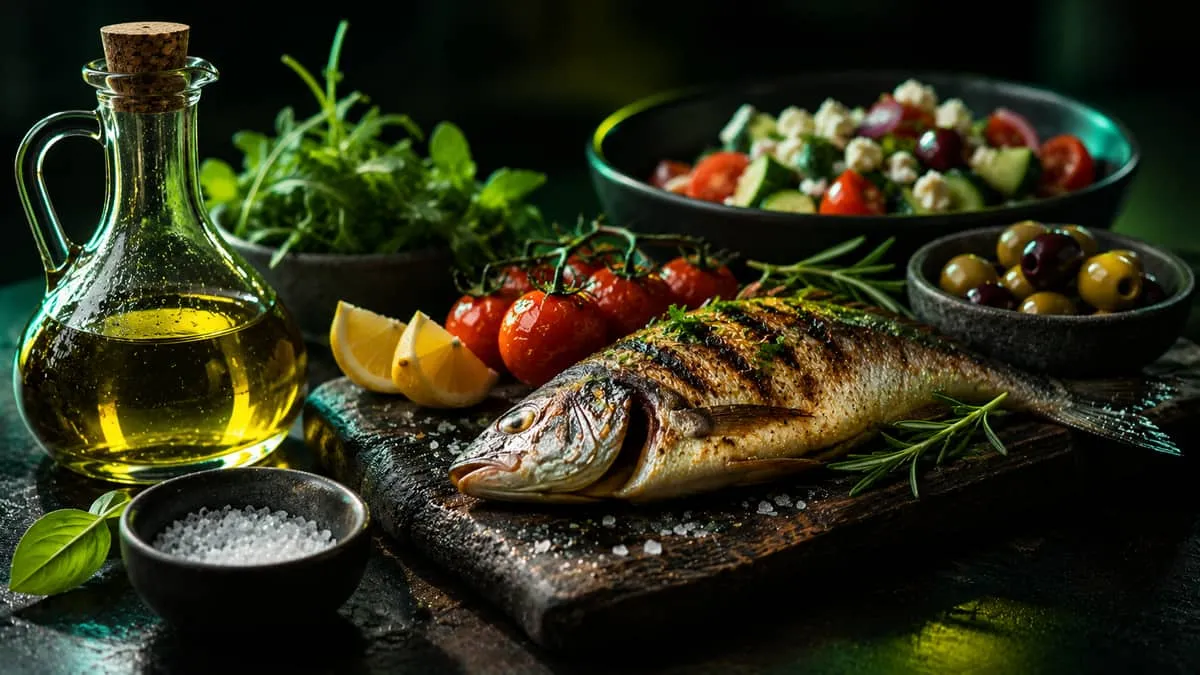
The Mediterranean diet: what it means in practice
The Mediterranean diet is not a fad diet, and it has no list of forbidden foods to follow. It is an eating pattern: lots of vegetables, fruit, legumes, whole grains, olive oil and fish, with less red and processed meat and fewer refined carbohydrates. The principles are simple, so they fit well into everyday life.
Among participants in the PREDIMED study, a Mediterranean diet supplemented with extra virgin olive oil or nuts was linked to a lower risk of cardiovascular events. This is a research finding, not a guarantee: diet is one factor alongside the rest of your lifestyle.
What goes on the plate?
The core of the pattern is that plant foods form the base of your meals, and your protein sources vary.
- Daily: vegetables, fruit, whole grains, olive oil, a handful of nuts.
- Several times a week: legumes (beans, lentils, chickpeas), fish, eggs, dairy in moderation.
- Less often: red meat, processed meat products, sweets, refined pastries.
How to start
Do not try to transform your whole kitchen at once. Start with small swaps:
- Swap butter or margarine for olive oil where you can.
- Have fish or legumes in your main meal at least twice a week.
- Put out a handful of walnuts or almonds for your afternoon snack.
- Find a vegetable for every meal, as a salad or in a soup.
A sample day
This is not a prescription, just an idea of how it can look in practice:
- Breakfast: porridge or plain yoghurt with fruit and walnuts, see the protein porridge recipe.
- Lunch: lentil or chickpea salad with olive oil and wholemeal bread.
- Snack: fruit and a handful of nuts.
- Dinner: baked fish with steamed vegetables and olive oil. You can read how much fish is worth eating in the omega-3 article.
Together with training
This diet can be set up for building muscle too: fish, eggs, cottage cheese and legumes give plenty of protein. You will find the exact target in the article on protein. Plant foods also bring a lot of fibre, which we cover in the article on fibre.
What research does not say
The Mediterranean diet is not a miracle either. Study results apply to groups, and for any one person other factors (exercise, sleep, stress) matter too. So see it as a good foundation, not a cure.
This article is general information, not medical advice. If you have a medical condition, talk to a dietitian.
Sources
- Estruch R et al. (2018): Primary Prevention of Cardiovascular Disease with a Mediterranean Diet Supplemented with Extra-Virgin Olive Oil or Nuts. N Engl J Med 378:e34
- WHO (2020): Healthy diet, fact sheet
Updated: November 2026
Read on
How much protein do you need to build muscle?
What research says about daily protein intake alongside strength training, how to get it from everyday food, and when a supplement makes sense.
Nutrition
Fibre: why most diets fall short
EFSA considers 25 grams of fibre a day adequate. Where it can come from, how to increase it without bloating, and how to fit it into your meals.
Vitamins and supplements
Omega-3: how much fish is enough?
According to EFSA, 250 mg of EPA+DHA a day is adequate for adults. How much fish does that take?
Napra: training, meals and weight in one place
Follow your goals with the Napra app: a training log that knows your machines and a meal log.