

Omega-3: how much fish is enough?
Among the omega-3 fatty acids, EPA and DHA are the long-chain forms found in fish. In this article we look at how much of them you need, what to eat for them, and what to do if you do not like fish.
How much is enough?
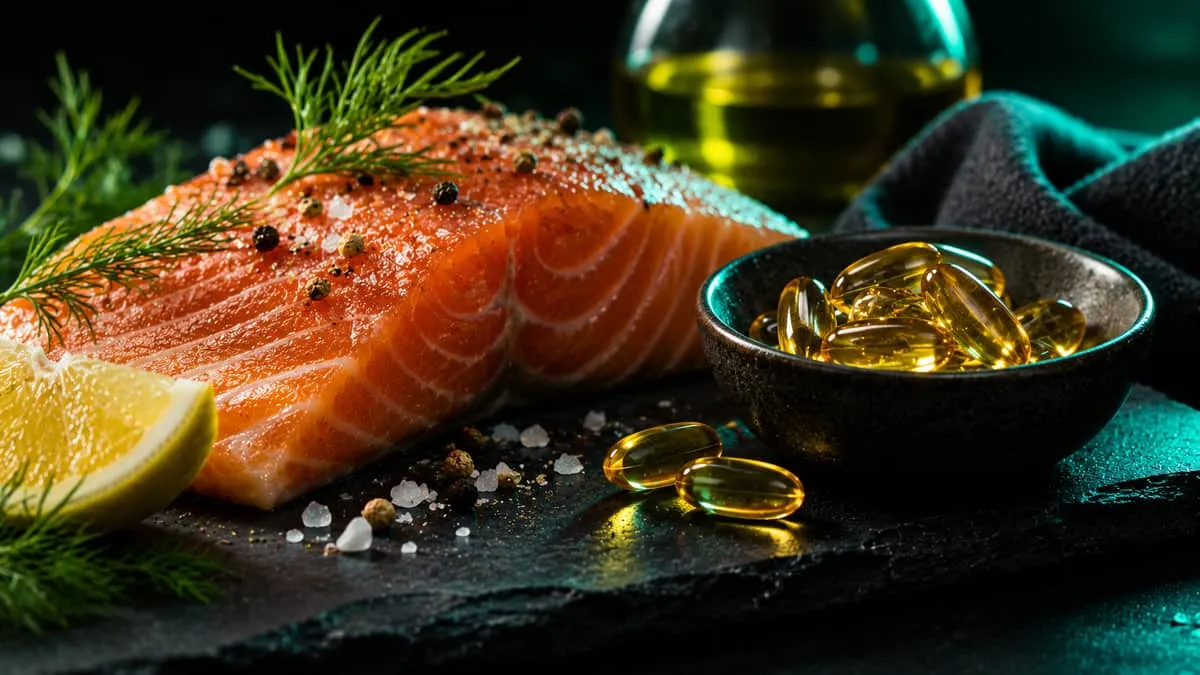
According to EFSA, 250 mg of EPA+DHA a day is adequate for adults. That is roughly 1–2 portions of oily fish a week (salmon, herring, mackerel, sardines).
How to fit it in
- Baked, steamed or tinned fish for lunch or dinner, 1–2 times a week.
- In the Mediterranean diet, fish is a natural part of the weekly rotation: see the Mediterranean diet.
- Fish is also a good source of protein, covered in our article How much protein do you need.
If you do not eat fish
An algae oil supplement can be an alternative. Walnuts and flaxseed contain ALA, which is converted into EPA and DHA only to a small extent.
Important
This article is general information, not medical advice.
Sources
- EFSA (2010): Scientific Opinion on Dietary Reference Values for fats. EFSA Journal 8(3):1461
Updated: November 2026
Read on

The Mediterranean diet: what it means in practice
Vegetables, legumes, fish, olive oil: the principles of the Mediterranean diet, a sample day, and how to bring it into everyday life simply.
Vitamins and supplements
Vitamin D in winter: should you take it, and how much?
Why vitamin D runs low in winter in Central Europe, what the official recommendation says, and when to talk to a doctor.
Nutrition
How much protein do you need to build muscle?
What research says about daily protein intake alongside strength training, how to get it from everyday food, and when a supplement makes sense.
Napra: training, meals and weight in one place
Follow your goals with the Napra app: a training log that knows your machines and a meal log.