

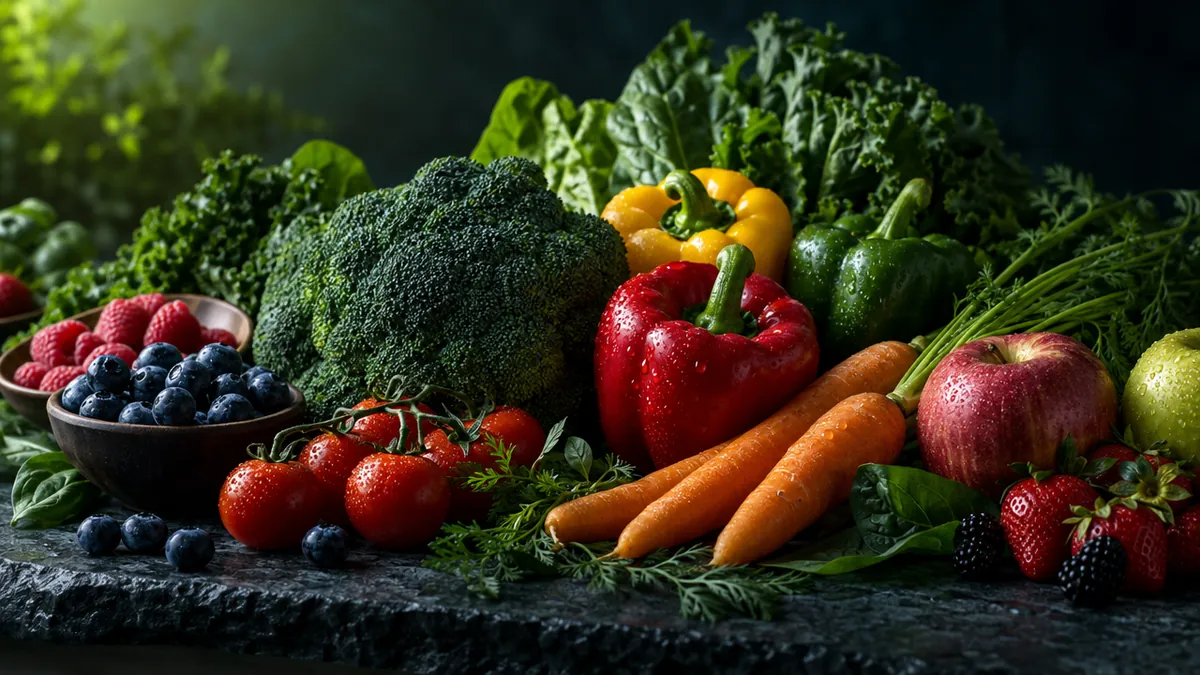
Five a day: what it means, and does it really matter?
The “five a day” recommendation is based on the WHO’s advice of at least 400 g of vegetables and fruit a day.
What do studies show?
According to a dose-response meta-analysis, eating around 800 g of vegetables and fruit a day lowered risk further still, but the biggest benefit came with the first 400 g or so. According to another meta-analysis in the BMJ, the risk of death from all causes fell up to 5 portions a day, and only a little above that.
How big is a portion?
- 1 medium piece of fruit (apple, banana, orange)
- 1 handful of berries
- 1 large handful of raw salad or leafy greens
- About 80 g of cooked vegetables (2–3 tablespoons)
Potatoes do not count, and legumes count in part.
How to get there
- Breakfast: fruit on your porridge, berries with yoghurt.
- Lunch and dinner: fill half your plate with vegetables.
- Snacks: carrots, cucumber, peppers, an apple.
- Frozen vegetables: cheap, nutrient-rich, quick.
- Colours: vegetables of different colours give different nutrients.
Fruit juice and dried fruit
Fruit juice has little fibre and a lot of sugar, and dried fruit is concentrated calories. These count as 1 portion a day at most. More: fibre, added sugar.
This article is general information, not medical or dietary advice.
Sources
- Aune D et al. (2017): Fruit and vegetable intake and the risk of cardiovascular disease, total cancer and all-cause mortality: a systematic review and dose-response meta-analysis of prospective studies. Int J Epidemiol 46(3):1029–1056
- WHO (2003): Diet, nutrition and the prevention of chronic diseases. WHO Technical Report Series 916
- Wang X et al. (2014): Fruit and vegetable consumption and mortality from all causes, cardiovascular disease, and cancer: systematic review and dose-response meta-analysis of prospective cohort studies. BMJ 349:g4490
Updated: November 2026
Read on
Fibre: why most diets fall short
EFSA considers 25 grams of fibre a day adequate. Where it can come from, how to increase it without bloating, and how to fit it into your meals.
Nutrition
The Mediterranean diet: what it means in practice
Vegetables, legumes, fish, olive oil: the principles of the Mediterranean diet, a sample day, and how to bring it into everyday life simply.
Nutrition
Gut flora and probiotics: what we know about the microbiome
The gut microbiome is one of the hottest health topics. What does research show, do you need probiotics, and what should you eat for your gut flora?
Napra: training, meals and weight in one place
Follow your goals with the Napra app: a training log that knows your machines and a meal log.