

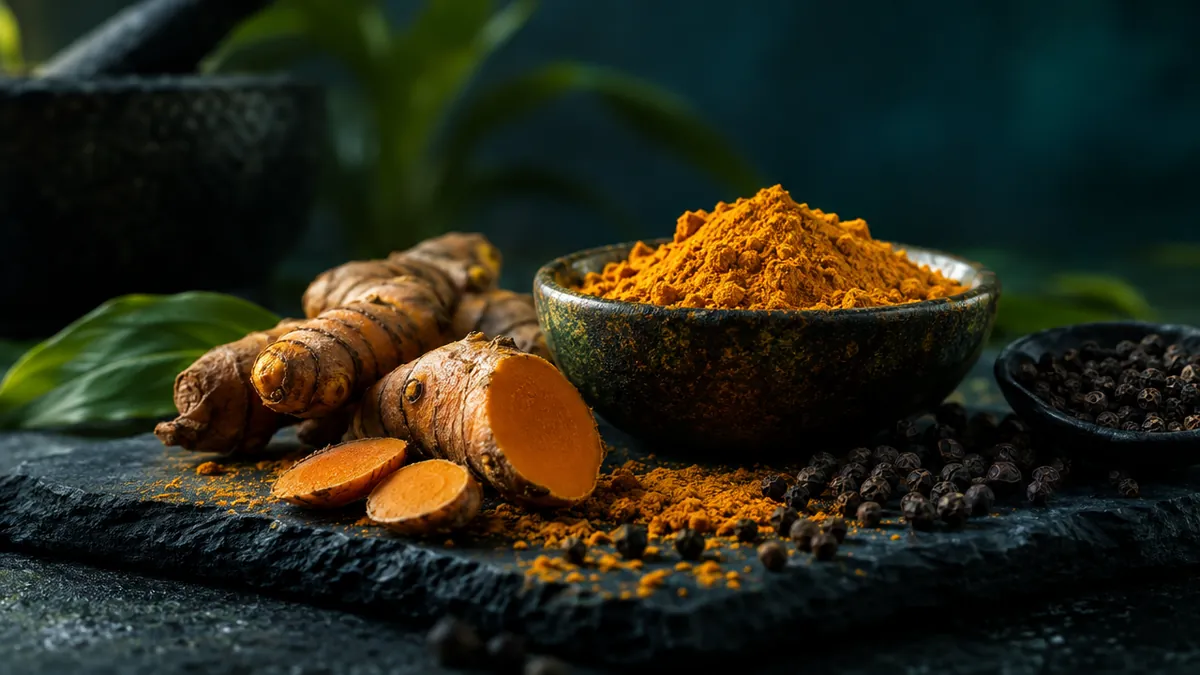
Turmeric and curcumin: an anti-inflammatory miracle or an overblown promise?
Turmeric is the yellow spice, and its active compound is curcumin. It has been used in Ayurveda for centuries, and today it is sold as an anti-inflammatory supplement.
What does research show?
According to a meta-analysis, curcumin reduced joint pain in osteoarthritis in a few smaller studies, but these were generally short, with small samples and often weak methods. Researchers rate the evidence as moderate to low quality.
The absorption problem
Curcumin is poorly absorbed and breaks down quickly. That is why many products try to improve absorption with black pepper (piperine) or lipid-based formulas, but these can also bring a higher risk of side effects and drug interactions.
Safety
- As a spice, it is safe even in generous amounts.
- High-dose supplements have rarely caused liver injury.
- Care is needed with blood thinners, blood sugar-lowering drugs and gallstones.
What can you do for your joints?
The best proven: strength training, weight management and movement. See also: collagen and joints, omega-3.
This article is general information, not medical advice.
Sources
- Daily JW et al. (2016): Efficacy of turmeric extracts and curcumin for alleviating the symptoms of joint arthritis: a systematic review and meta-analysis of randomized clinical trials. J Med Food 19(8):717–729
- Nelson KM et al. (2017): The essential medicinal chemistry of curcumin. J Med Chem 60(5):1620–1637
- Halegoua-DeMarzio D et al. (2023): Liver injury associated with turmeric: a growing problem. Am J Med 136(2):200–206
- EFSA ANS Panel (2010): Scientific opinion on the re-evaluation of curcumin (E 100) as a food additive. EFSA Journal 8(9):1679
Updated: November 2026
Read on
Collagen: does it help joints and tendons?
Collagen powder is popular, but what does research show? What is there evidence for, and what not?
Vitamins and supplements
Omega-3: how much fish is enough?
According to EFSA, 250 mg of EPA+DHA a day is adequate for adults. How much fish does that take?
Vitamins and supplements
Supplement quality: how to choose a reliable product
Contaminated, counterfeit or misleading supplements exist. What to look for on the label, and what third-party testing means.
Napra: training, meals and weight in one place
Follow your goals with the Napra app: a training log that knows your machines and a meal log.