

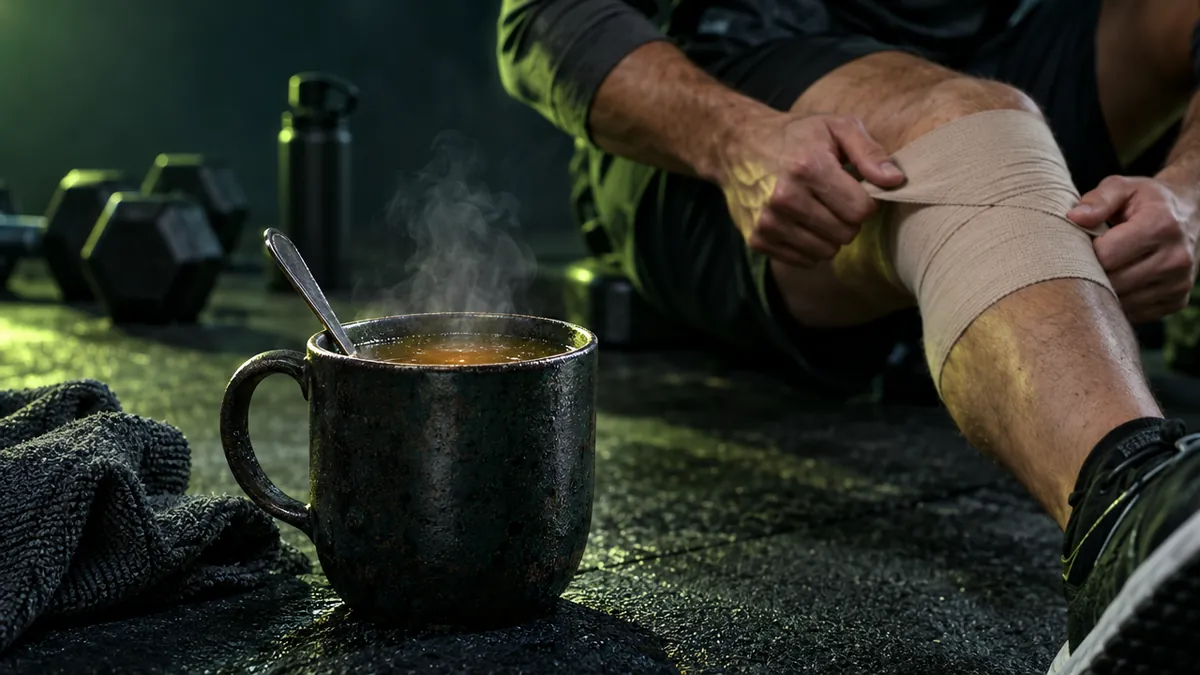
Collagen: does it help joints and tendons?
Collagen is the most abundant protein in the body: the building block of skin, tendons, joint cartilage and bones. No wonder many people see collagen powder as a miracle supplement. What does it really do?
What does research show?
According to a 2021 review, collagen peptide supplements in some studies reduced joint pain and improved function, but the quality of the studies varies, the effect is small, and many studies were funded by manufacturers.
In another well-known study, gelatin enriched with vitamin C taken 1 hour before exercise increased markers of collagen synthesis in the blood. However, this is a lab marker, and it does not prove that your tendons will be stronger in the long run.
What not to expect
- Muscle building: collagen’s amino acid profile is not ideal for building muscle (little leucine, no tryptophan), so it does not replace complete protein.
- A quick miracle: the effect, if any, appears over weeks or months.
What you can do for healthy tendons and joints
- Gradual loading: tendons and joints adapt more slowly than muscles. Do not make big jumps in weight.
- Strength training: stronger muscles protect the joint. See: Progressive overload.
- Enough protein and vitamin C: both are needed for collagen synthesis.
- Technique: correct form reduces the load (squat technique).
This article is general information, not medical or dietary advice.
Sources
- Khatri M et al. (2021): The effects of collagen peptide supplementation on body composition, collagen synthesis, and recovery from joint injury and exercise: a systematic review. Amino Acids 53:1493–1506
- Shaw G et al. (2017): Vitamin C-enriched gelatin supplementation before intermittent activity augments collagen synthesis. Am J Clin Nutr 105(1):136–143
Updated: November 2026
Read on
How much protein do you need to build muscle?
What research says about daily protein intake alongside strength training, how to get it from everyday food, and when a supplement makes sense.
Vitamins and supplements
Vitamin C: do you need a supplement, and how much is enough?
How much vitamin C you need a day according to EFSA, and what a supplement can really do against colds.
Training
Squat technique: step by step for beginners
How to stand, how deep to squat, and what to watch so your squat is effective and safe.
Napra: training, meals and weight in one place
Follow your goals with the Napra app: a training log that knows your machines and a meal log.