

Waking up at night: why it happens, and what you can do
Waking briefly several times a night is normal, and you will not remember most of it in the morning. It becomes a problem when you struggle to fall back asleep, or wake up tired.
Common causes
- Alcohol: it can help you fall asleep, but makes sleep lighter and more broken in the second half of the night.
- Caffeine in the late afternoon or evening.
- Stress, worry, racing thoughts.
- Temperature, noise, light in the bedroom.
- Eating at night, reflux.
- Needing to urinate: a lot of fluid in the evening, the prostate in men, and other causes in women.
- Sleep apnoea: snoring, pauses in breathing.
What you can do
- Regularity: a consistent bedtime and wake-up time.
- A cool, dark room (about 16–19 °C is a common recommendation).
- Evening fluids and alcohol: cut back in the hours before bed.
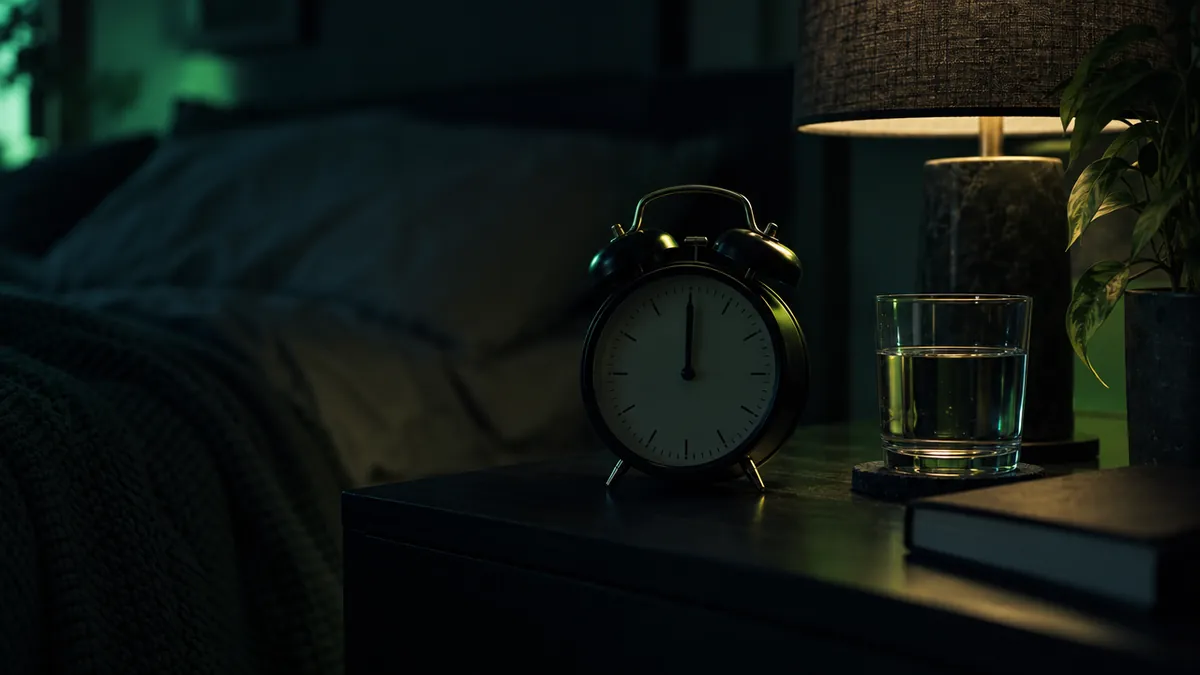
- Do not look at the clock: cover it or turn it away.
- If you are not back asleep after 20–30 minutes: get up, read in low light or listen to calming music, then go back to bed when you feel sleepy. Avoid screens: evening screens.
- Write your thoughts down: a 5-minute to-do list in the evening helps against racing thoughts.
Cognitive behavioural therapy (CBT-I)
The first-line, proven treatment for chronic insomnia is cognitive behavioural therapy for insomnia (CBT-I), which the ACP guideline puts ahead of medication. It is available online and with a professional.
The basics: sleep hygiene, caffeine and sleep.
This article is general information, not medical advice.
Sources
- Ohayon MM et al. (2017): National Sleep Foundation's sleep quality recommendations: first report. Sleep Health 3(1):6–19
- Qaseem A et al. (2016): Management of chronic insomnia disorder in adults: a clinical practice guideline from the American College of Physicians. Ann Intern Med 165(2):125–133
- Ebrahim IO et al. (2013): Alcohol and sleep I: effects on normal sleep. Alcohol Clin Exp Res 37(4):539–549
Updated: November 2026
Read on
Sleep hygiene: 10 simple habits for better sleep
How much should you sleep, and how can you improve sleep quality? Practical habits backed by research.
Sleep and recovery
Caffeine and sleep: when should you have your last coffee?
How much caffeine is safe according to EFSA, and why it is worth stopping six hours before bed.
Sleep and recovery
Screens in the evening: does blue light matter?
What research says about using screens before bed, and what is worth changing.
Napra: training, meals and weight in one place
Follow your goals with the Napra app: a training log that knows your machines and a meal log.