

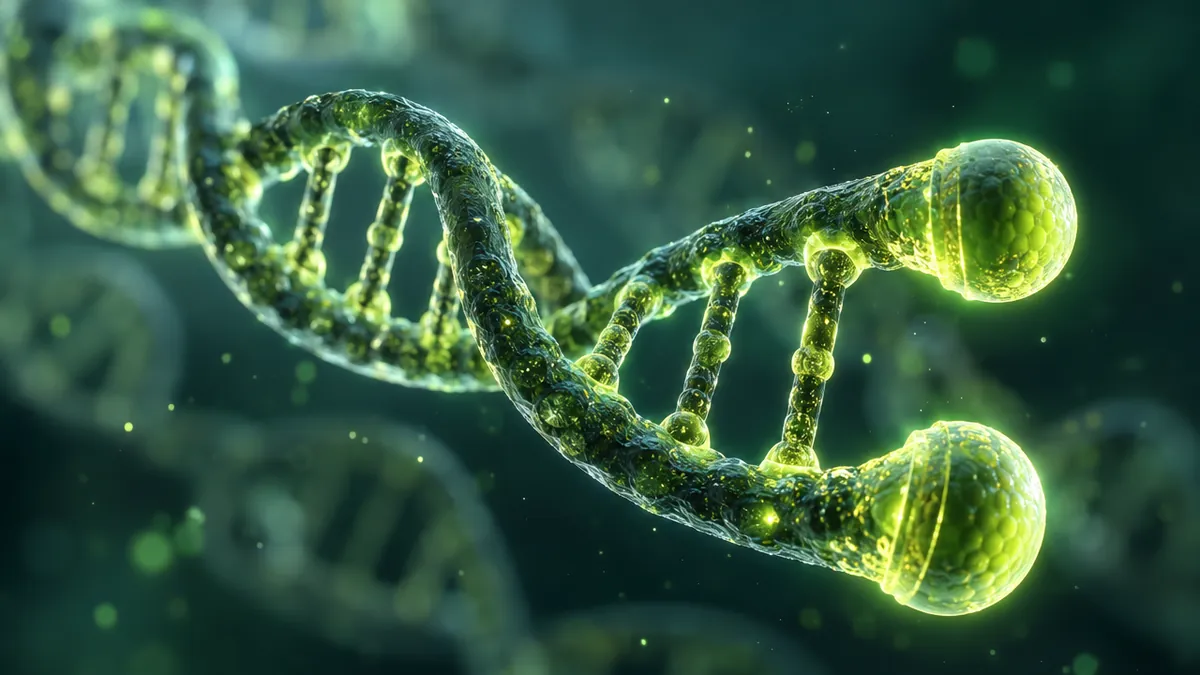
Telomeres and ageing: can "biological age" be measured?
Telomeres are protective caps at the ends of chromosomes that get slightly shorter with every cell division. When they become too short, the cell stops dividing. That is why they are an important measure in ageing research, and why home “telomere tests” are now on sale.
What do we really know?
- Telomere length decreases with age on average, but the spread at any given age is huge: the telomere length of a 30-year-old and a 60-year-old can overlap.
- In observational studies, chronic stress, smoking and obesity went together with shorter telomeres.
- So ageing is not only about telomeres. Researchers describe a dozen “hallmarks of ageing”.
Can you influence them?
A link between lifestyle and telomere length is likely, but that “lengthening” telomeres (for example with supplements) gives a longer life has not been shown. What is more, excessive telomerase activity is a feature of cancer cells, so it is not desirable at any cost.
What is worth doing?
The same as every study on healthy ageing recommends: exercise, strength training, sleep, no smoking, and eating in moderation. These also improve measurable markers such as blood pressure, blood sugar and fitness, which are far more practical than a telomere test.
This article is general information, not medical advice.
Sources
- Blackburn EH, Greider CW, Szostak JW (2006): Telomeres and telomerase: the path from maize, Tetrahymena and yeast to human cancer and aging. Nat Med 12:1133–1138
- Epel ES et al. (2004): Accelerated telomere shortening in response to life stress. PNAS 101(49):17312–17315
- López-Otín C et al. (2023): Hallmarks of aging: an expanding universe. Cell 186(2):243–278
- Müezzinler A et al. (2013): A systematic review of leukocyte telomere length and age in adults. Ageing Res Rev 12(2):509–519
Updated: November 2026
Read on
Slowing ageing: 7 habits with real evidence behind them
Youth, long life, healthy ageing: which habits are backed by the strongest research, and which remain promises?
Biohacking
NMN and NAD+: anti-ageing wonder or marketing?
NMN and other NAD+ precursors are popular "rejuvenating" supplements. What does research in humans show, and are they worth the money?
Biohacking
Autophagy: cellular 'self-renewal', and what we know about it in humans
What is autophagy, how is it linked to fasting and exercise, and how believable are the promises of 'autophagy hacks'?
Napra: training, meals and weight in one place
Follow your goals with the Napra app: a training log that knows your machines and a meal log.