

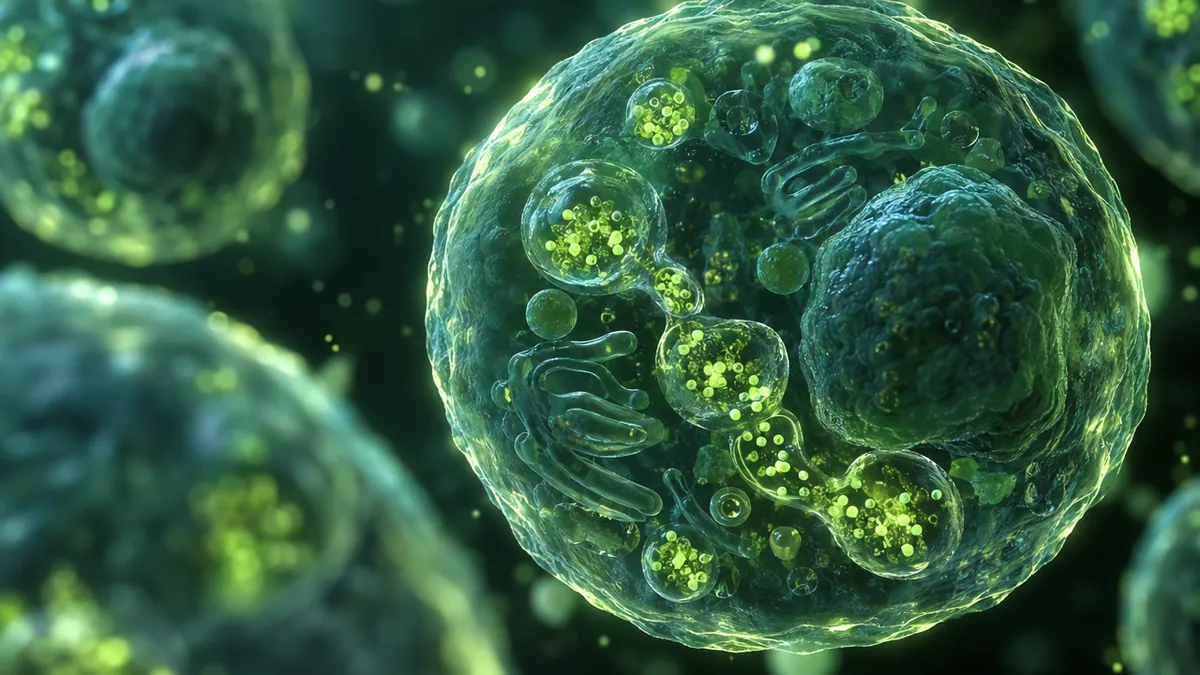
Autophagy: cellular 'self-renewal', and what we know about it in humans
Autophagy literally means “self-eating”: the cell breaks down and recycles its damaged or unneeded parts. Yoshinori Ohsumi won the Nobel Prize in 2016 for uncovering the molecular basis of the process, and since then “cellular renewal” has become one of biohacking’s favourite phrases.
What is true?
Autophagy is a basic cellular process. Without it, cells cannot get rid of faulty proteins and organelles. Problems with it may play a role in nervous system and metabolic diseases, among others. This scientific part is solid.
What is not proven?
The popular claim is that a 16–24 hour fast “switches on” autophagy and so slows ageing. Here the evidence is weak:
- Most data come from animals and cell cultures.
- Autophagy is hard to measure in humans (it usually needs a tissue sample), so we do not know exactly when and how much it increases.
- In mice, exercise increased autophagy in muscle, but that does not mean the extent and benefit are the same in humans.
What is worth doing?
What we know is good for your health probably supports autophagy too:
- Regular exercise: both strength training and cardio.
- Enough sleep, because your body clock and metabolism are linked.
- Moderate eating: there is no need for extreme fasting. We wrote about intermittent fasting in a separate article.
Our broader article on slowing ageing is here: what is actually proven.
This article is general information, not medical advice.
Sources
- Mizushima N, Levine B (2020): Autophagy in human diseases. N Engl J Med 383:1564–1576
- Nobel Prize in Physiology or Medicine 2016: Yoshinori Ohsumi, for discoveries of mechanisms for autophagy (nobelprize.org)
- Ntsapi C, Loos B (2016): Caloric restriction and the precision-control of autophagy. Biochimie 125:223–232
- He C et al. (2012): Exercise-induced BCL2-regulated autophagy is required for muscle glucose homeostasis. Nature 481:511–515
Updated: November 2026
Read on

Intermittent fasting: does it work, and who is it for?
Intermittent fasting is a way of timing your meals. What research shows about weight loss and muscle, and who should avoid it.
Biohacking
Slowing ageing: 7 habits with real evidence behind them
Youth, long life, healthy ageing: which habits are backed by the strongest research, and which remain promises?
Training
Zone 2 cardio: what it is, and do you need it?
Zone 2 is easy to moderate endurance training at a conversational pace. Why it is recommended, how to find your pace, and how much is enough.
Napra: training, meals and weight in one place
Follow your goals with the Napra app: a training log that knows your machines and a meal log.