

Zinc: what it does, how much you need, and when it can harm
Zinc is a trace element needed by hundreds of enzymes, the immune system and wound healing. Deficiency is rare, but it can occur with certain diets.
How much do you need?
EFSA’s recommendation depends on phytate intake, because phytate (in grains and legumes) blocks zinc absorption. On an average diet, the recommended daily intake is roughly 9.4–16.3 mg for adult men and 7.5–12.7 mg for women.
Good sources of zinc
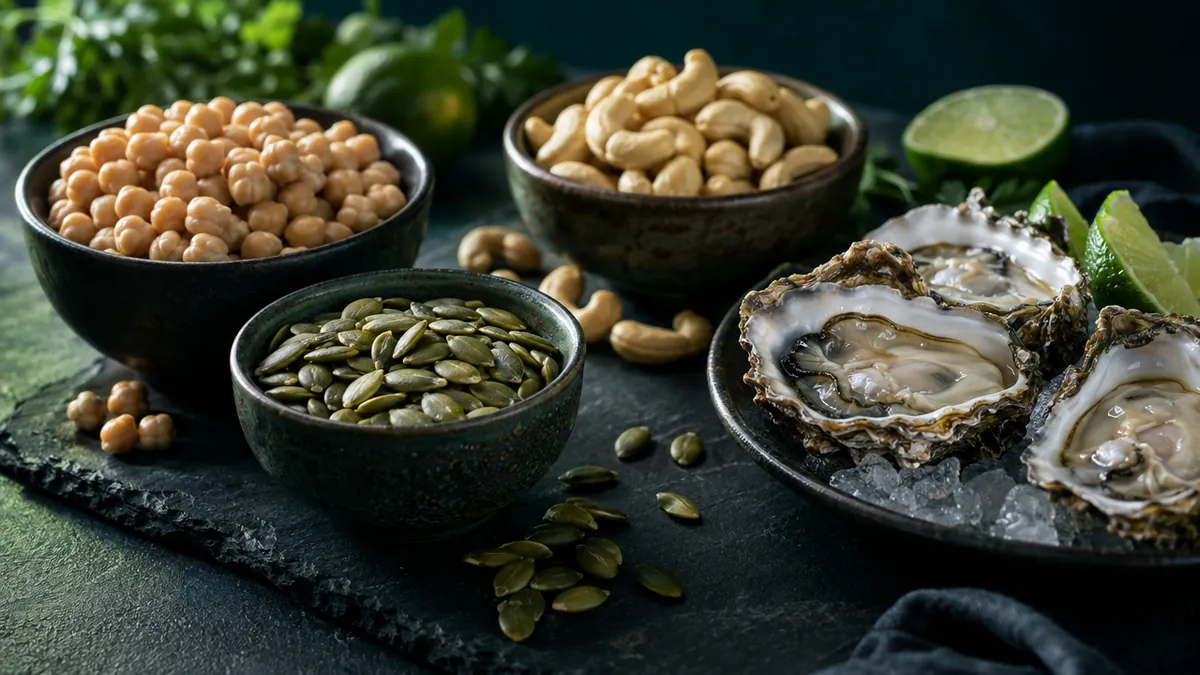
- Oysters and mussels (exceptionally high)
- Beef, pork, poultry
- Pumpkin seeds, cashews, almonds
- Chickpeas, lentils, whole grains (but less is absorbed because of phytate)
- Cheese, eggs
When can it harm?
Lasting high doses (above 40 mg a day, but even above 25 mg if taken for a long time) can cause copper deficiency, nausea and diarrhoea. Overuse of zinc-containing denture creams has also led to poisoning.
For athletes
A small amount of zinc is lost in sweat, but a varied diet usually covers it. A supplement is mainly needed if your diet is one-sided or a blood test confirms a deficiency.
This article is general information, not medical or dietary advice.
Sources
- EFSA (2014): Scientific Opinion on Dietary Reference Values for zinc. EFSA Journal 12(10):3844
- EFSA (2006): Tolerable upper intake levels for vitamins and minerals
- NIH Office of Dietary Supplements: Zinc Fact Sheet for Health Professionals
Updated: November 2026
Read on
Iron and tiredness: when to suspect iron deficiency
Iron deficiency is common, especially in women and athletes. How much iron do you need, what are good sources, and when should you see a doctor?
Nutrition
How much protein do you need to build muscle?
What research says about daily protein intake alongside strength training, how to get it from everyday food, and when a supplement makes sense.
Vitamins and supplements
Magnesium: do you need a supplement?
How much magnesium is enough a day, where to get it from food, and when to talk to a doctor about a supplement.
Napra: training, meals and weight in one place
Follow your goals with the Napra app: a training log that knows your machines and a meal log.